

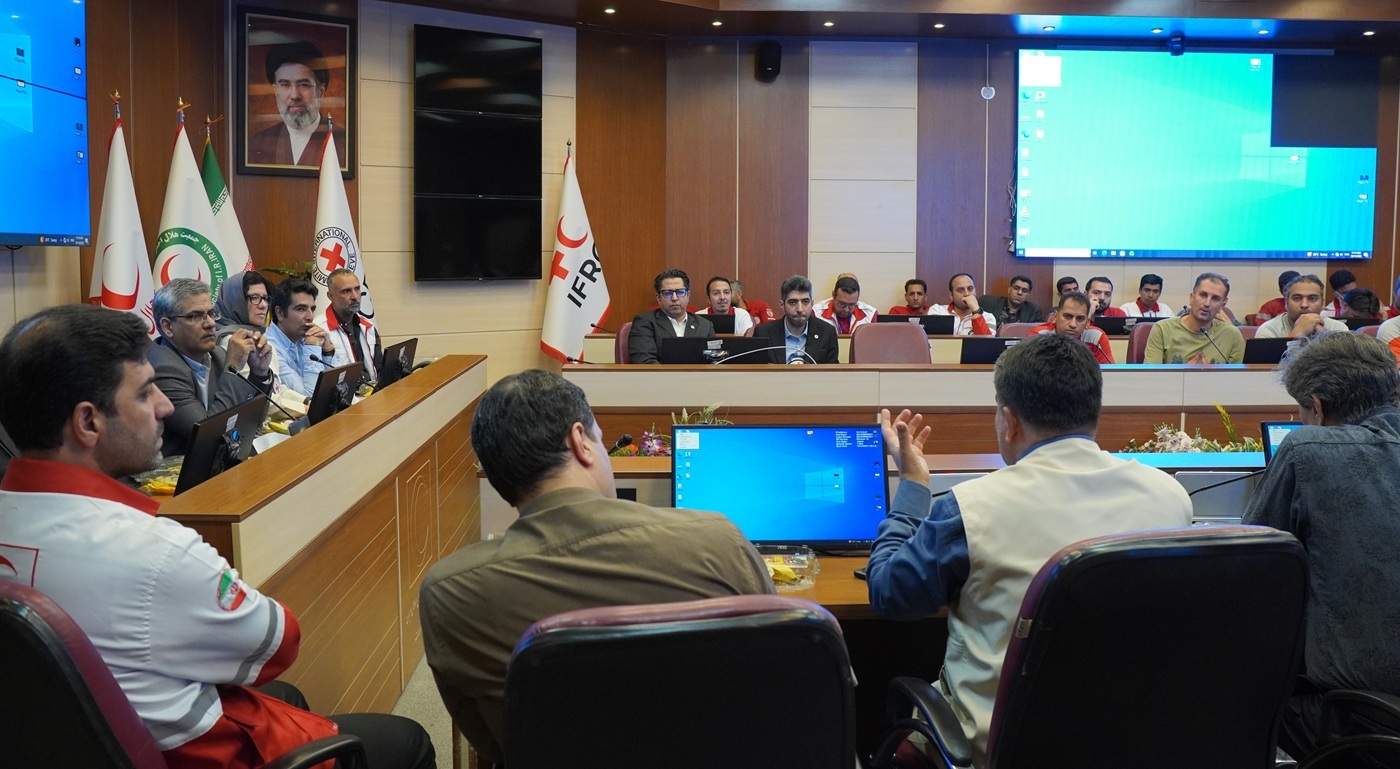
The closing ceremony for the third edition of the Training Course on Application of Personal Protective Equipment during Chemical, Biological, Radiological, and Nuclear Incident has been held. The first round of the course was held in June, with the two later editions being held from October 4-8 and 11-15, separately. The course aimed to improve preparedness and the operational capacity of relief teams and has been attended by a total number of 150 members of rapid response teams from different provinces in the country.
During the closing ceremony, the attendees and instructors reviewed achievements, strengths, and ground for improvement. Stressing the need to repeat the exercises, organize the course in provincial levels, and to provide complementary equipment required, the attendees emphasized that the experience was different from previous maneuvers. The instructors also expressed gratitude for the participants’ active involvement, reiterating their positive performance during practical simulation exercises in applying the learning points and following the decontamination process suited to each type of contamination.
Speaking on the sidelines of the ceremony, the head of ICRC’s Tehran Delegation, Marisela Silva Chau, highlighted the close collaboration between ICRC and the Iranian Red Crescent Society, citing the workshop a concrete example, putting together IRCS’ operational experience and ICRC’s academic expertise and technical, equipment support. She reiterated the ICRC’s readiness to throw support behind similar courses to be held at a provincial level, while stressing the importance of transferring learnings to operational teams and their application in daily activities.
The IRCS Deputy Director for Education, Research and Technology, Dr. Rouzbeh Rajaei, also stressed continued training, teacher training, and planning for similar course to be held for female participants, noting the participation of experts from different scientific institutions and centers.
The continued collaboration and transfer of knowledge and experience to operational teams is an important step in strengthening the incident preparedness and response capacity.
Comments